Digital marketing has become one of the most important parts of modern business. Companies, startups and small businesses are increasingly using online platforms to promote their products, reach potential customers and build brand awareness. As businesses continue to expand their online presence, the demand for people with digital marketing skills is also growing.
This growth has encouraged many students, job seekers, working professionals and entrepreneurs to explore digital marketing as a career or skill development opportunity. However, with so many online courses and training institutes available, choosing the right course can be confusing.
So, Which Course Is Best In Digital Marketing? The best course is one that provides comprehensive knowledge, practical training, updated tools and an understanding of real-world marketing strategies. At Rank Brain Marketing, learners can explore different digital marketing skills and understand how various online marketing channels work together to support business growth.
In this blog, we will discuss the important modules, training features, career opportunities and factors to consider before choosing the right digital marketing course.
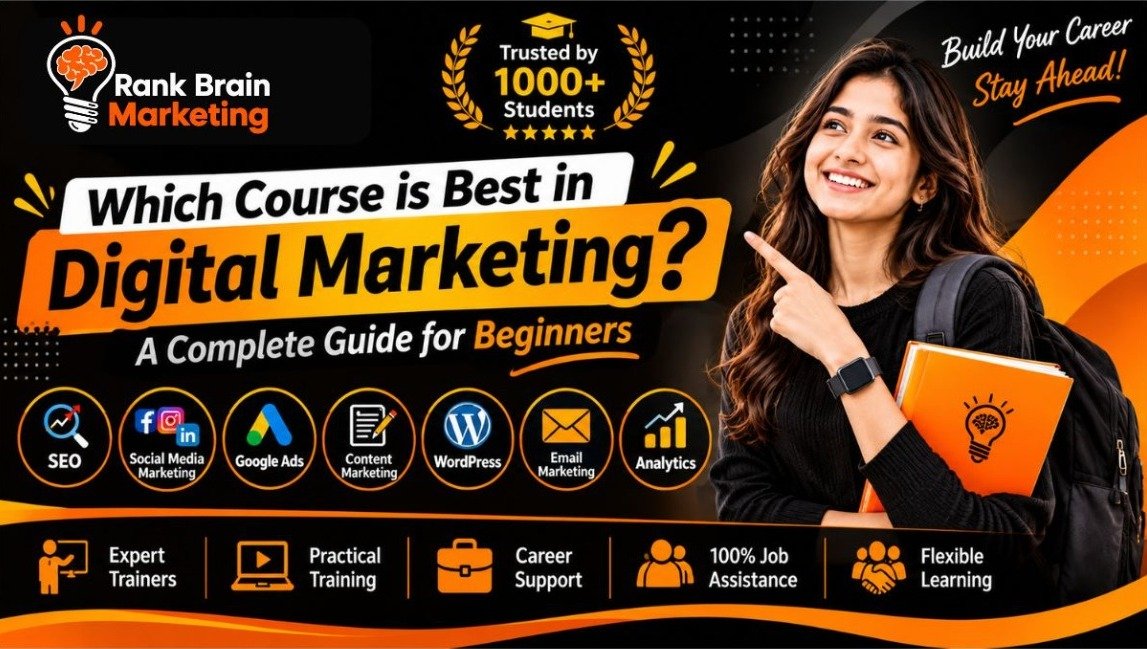
Which Course Is Best in Digital Marketing?
A comprehensive digital marketing course is generally a suitable choice for beginners who want to understand the industry and develop multiple skills. Instead of learning only one marketing technique, a complete course helps students explore different digital channels and their applications.
The best digital marketing course should include SEO, social media marketing, Google Ads, content marketing, email marketing, website development and analytics. These skills help learners understand how businesses attract visitors, generate leads, engage audiences and measure marketing performance.
At Rank Brain Marketing, digital marketing learning can be approached through different marketing concepts and skill areas, allowing learners to understand the fundamentals of online promotion. When choosing a training program, students should focus on the curriculum, practical exposure and learning approach rather than only the certificate.
Important Modules to Learn in a Digital Marketing Course
Before enrolling in a digital marketing course, it is important to understand which modules are included. Learning different marketing techniques can help you develop a broader understanding of the industry.
1. Search Engine Optimization (SEO)
Search Engine Optimization is the process of improving a website’s visibility in organic search results. SEO helps businesses attract relevant visitors from search engines without paying for every click.
A good digital marketing course should cover keyword research, on-page SEO, off-page SEO, technical SEO, local SEO, content optimization and website auditing.
Students should also learn how to use SEO tools, analyze website performance and understand search intent. SEO knowledge can help learners improve website visibility and create content that aligns with what users are searching for.
2. Social Media Marketing
Social media marketing helps businesses connect with their audiences, promote products and build brand awareness through platforms such as Instagram, Facebook and LinkedIn.
Students should learn social media strategy, content planning, account management, audience engagement, content calendars and performance analysis.
Social media marketing is useful for businesses of different sizes because it allows them to communicate with customers, share updates and create an online community. Learning these techniques can help students explore opportunities in social media management and digital marketing.
3. Google Ads and Paid Advertising
Paid advertising is an important digital marketing channel for businesses that want to reach targeted audiences and generate leads or sales.
A digital marketing course should cover campaign planning, keyword selection, ad copywriting, audience targeting, budgeting, bidding strategies and campaign optimization.
At Rank Brain Marketing, learners interested in digital marketing should explore how paid advertising works alongside organic marketing techniques. Understanding both approaches can help students develop a broader perspective on online promotion.
4. Content Marketing and Blogging
Content marketing involves creating valuable and informative content to attract, engage and retain audiences. It includes blogs, articles, website pages, videos, social media content and other digital formats.
Students should learn content planning, audience research, blog writing, content optimization, headline creation and storytelling.
Content marketing also plays an important role in SEO because useful content can help websites answer user queries and build topical relevance. Learning content creation can be beneficial for aspiring SEO professionals, bloggers and social media marketers.
5. Website Development Using WordPress
A website is an important foundation for most digital marketing activities. Understanding how websites work can help digital marketers manage content, optimize pages and improve user experience.
WordPress is a popular platform for creating websites and blogs. A digital marketing course should introduce learners to WordPress, website structure, page creation, plugins, basic design, landing pages and website optimization.
Basic website development knowledge can help students work more effectively on SEO, content publishing and online campaigns.
6. Email Marketing
Email marketing is used by businesses to communicate directly with customers, share updates, promote offers and build long-term relationships.
Students should learn email campaign planning, audience segmentation, email content, newsletters, automation and campaign performance tracking.
Email marketing can help businesses maintain communication with their audiences and encourage repeat engagement. It is also a useful skill for people interested in digital marketing and customer communication.
7. Analytics and Digital Marketing Tools
Digital marketing campaigns need to be measured regularly to understand their performance. Analytics tools help marketers evaluate traffic, engagement, conversions and campaign results.
Students should become familiar with tools such as Google Analytics, Google Search Console and relevant SEO or advertising tools.
Understanding important metrics, including click-through rate, traffic sources, engagement and conversions, can help learners analyze campaign performance and make informed marketing decisions.
Why Choose Rank Brain Marketing for Digital Marketing Training?
Choosing the right training institute can help learners understand digital marketing concepts in a structured manner. Rank Brain Marketing is a name learners can explore when looking for digital marketing training and skill development.
A good learning approach should focus on understanding different marketing channels, working with relevant tools, practicing concepts and developing the knowledge needed to handle marketing tasks.
Before choosing a course at Rank Brain Marketing, learners should review the curriculum, practical training approach, trainer experience and available career guidance to understand how the program aligns with their goals.
Learning digital marketing through structured training and regular practice can help beginners build a foundation in SEO, social media, advertising, content marketing and analytics.
How to Choose the Right Digital Marketing Course?
Selecting a course requires careful consideration of several factors. The following points can help you make a better decision.
Updated Course Curriculum
Digital marketing is continuously evolving. Choose a course that covers relevant platforms, current SEO practices, modern advertising techniques, analytics and AI-assisted marketing tools.
Practical Training
Practical assignments and projects help learners understand how marketing strategies work. Look for a course that provides opportunities to work on website optimization, content creation, campaign planning and tool-based exercises.
Experienced Trainers
Trainers with relevant knowledge and practical experience can help students understand concepts through examples and guided learning.
Career Guidance
Resume preparation, interview practice, portfolio development and career counselling can be helpful for students who want to explore job opportunities after training.
Flexible Learning
Students, working professionals and business owners may have different schedules. Consider the course timings, learning support and training format before enrolling.
Who Can Learn Digital Marketing?
Digital marketing is a skill-based field that can be explored by people from different educational and professional backgrounds.
- Students: Learn practical skills alongside their academic studies and prepare for entry-level roles.
- Job seekers: Develop marketing skills and explore career opportunities in the digital industry.
- Working professionals: Upgrade their skills or consider a career transition.
- Business owners: Learn online promotion, brand visibility and customer acquisition techniques.
- Freelancers: Explore opportunities to provide SEO, social media, content and advertising services.
You do not necessarily need a technical background to start learning digital marketing. With consistent practice, curiosity and a willingness to learn, beginners can gradually develop the skills required for different marketing activities.
Career Opportunities After Completing a Digital Marketing Course
Digital marketing offers several career opportunities for people who develop relevant skills and practical knowledge. After completing a digital marketing course, learners can explore different job roles depending on their interests and abilities.
Some popular career options include:
- SEO Executive
- Digital Marketing Executive
- Social Media Manager
- Content Marketing Executive
- PPC Executive
- Email Marketing Specialist
- Digital Marketing Analyst
- Freelance Digital Marketer
With experience, professionals may also progress towards senior roles such as Digital Marketing Manager, SEO Strategist, Performance Marketing Manager or Marketing Consultant.
Digital marketing also provides opportunities to work with companies, agencies, startups, online businesses or independent clients. Building a portfolio and gaining practical experience can help individuals strengthen their professional profiles.
Conclusion
Choosing the best digital marketing course depends on your learning goals, interests and career plans. A good course should cover essential digital marketing modules, provide practical training, introduce relevant tools and help learners understand how online marketing strategies work.
Rank Brain Marketing can be explored by individuals interested in learning digital marketing and developing skills in SEO, social media marketing, Google Ads, content marketing, website development and analytics.
Whether you are a student, job seeker, working professional, freelancer or business owner, digital marketing can help you explore new opportunities in the online world. However, completing a course is only the beginning. Consistent practice, project experience, creativity and staying updated with industry changes are equally important.
Choose the right learning path, practice regularly and focus on developing skills that can help you grow in the digital marketing industry.
Frequently Asked Questions (FAQs)
1. Which course is best in digital marketing for beginners?
A comprehensive digital marketing course covering SEO, social media marketing, Google Ads, content marketing, email marketing, WordPress and analytics is a good starting point for beginners.
2. Can I learn digital marketing without a technical background?
Yes, digital marketing can be learned without a technical background. Beginners can start with SEO, content marketing, social media and other fundamental modules.
3. How long does it take to learn digital marketing?
The learning duration depends on the course structure, learning pace and practical experience. A comprehensive training program may take a few months, while developing professional skills generally requires continued practice.
4. Is digital marketing a good career option?
Digital marketing can be a promising career option for individuals interested in online promotion, content creation, analytics and business growth. Career opportunities depend on skills, experience, industry demand and individual performance.
5. What skills are required to become a digital marketer?
Some useful skills include communication, creativity, analytical thinking, content writing, SEO knowledge, social media management, advertising knowledge and familiarity with digital marketing tools.
6. Can I become a freelancer after completing a digital marketing course?
Yes, freelancing is one of the career paths available in digital marketing. You can explore services such as SEO, social media management, content marketing, website optimization and paid advertising after developing the required skills and practical experience.
7. Does a digital marketing course provide job opportunities?
A digital marketing course can help you develop skills needed for entry-level roles. Job opportunities depend on your knowledge, practical projects, portfolio, communication skills and employer requirements.
8. Why is practical training important in digital marketing?
Practical training helps learners apply theoretical knowledge, understand marketing tools, work on projects, analyze campaign results and develop skills relevant to professional work.